
- September 4, 2026
- Mark Elwes
Need a Loan Without Collateral? Understanding Unsecured Loans for Bad Credit
Unsecured loans have always been a dependable source for borrowing funds. Without risking your assets, you can borrow funds for short-term and realistic requirements. But in order to use loans correctly, it is necessary that you have complete information about them.
Collateral-free borrowing is already popular
Unlike secured loans, unsecured loans with no collateral in the UK have different features. How they benefit a borrower or how you can use it correctly, you should only apply for these loans. Here is a guide to help you understand the loan options and use them well.
What are unsecured loans?
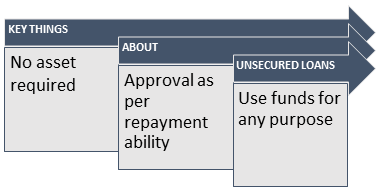
Unsecured loans are short-term borrowing options that let borrowers avail funds without pledging an asset as collateral. The loan option is designed to fulfil temporary financial requirements, whether personal or for businesses.
Medical expenses, educational expenses, car repairs, home repairs, purchase of raw materials in a business, etc., are some of the common purposes for which borrowers apply for unsecured loans.
The loans are available irrespective of credit score, status and employment status. It means you can apply with a good, fair or bad credit score. At the same time, whether you are unemployed, self-employed, or a freelancer, you can apply and avail funds irrespective of income type.
The primary condition to get approved for funds is a strong and provable repayment ability. For this, you need to have regular income, stable employment and a low debt-to-income ratio.
What affordability factors prove your creditworthiness?
Focus on the financial factors below to prove your repayment ability for unsecured loans.
- Affordability of Loan Repayments – Your existing debts and expenses, along with your remaining disposable income, prove your creditworthiness. More disposable income means you can conveniently accommodate a new loan instalment.
Therefore, it’s important that, before a loan application, you downsize your existing debts and expenses. Try to pay off some of your obligations. Also reduce or remove all discretionary expenses. That is the best way to accommodate a new loan instalment within your current limited income.
- Employment and Income Stability – Earning is not sufficient; you need to earn regularly. Also, your income should be consistent. It means every month you need to earn a specific amount.
Career stability is important, whether you are employed, a freelancer, or self-employed. Having a good career record, especially in the last six months, can help in the smooth approval of unsecured loans.
- Existing Debts and Financial Commitments – In the last six months, if you have paid your bills and debts on time, that convinces a lender to approve your loan application faster.
With clean payment behaviour, anyone, irrespective of credit score, can apply and avail funds. Your timely payment of bills and debts indicates that you are serious and responsible about your financial obligations.
- Income and Identity Verification Documents – Submit all the relevant documents with the latest updates. For identity proof, you can submit a driving license or passport.
For address proof, you can submit utility bills, a tenancy agreement, or documents of home ownership. Lenders need to have your current address for any contact requirements.
- Accuracy of Application Information – Mention all the details in your application form accurately and completely. That is vital to assess your affordability.
However, even if you skip any detail, it can be verified online. Hence, there is no point in missing any details. Once you fill out your application form, recheck and make sure that you have filled in all the details properly.
Why is unsecured borrowing different?
For some potential reasons, you can depend on collateral-free borrowing. The reasons are as rational as your financial requirements.
- Fixed interest rate – The loans have a fixed rate of interest. It means you can easily prepare a monthly instalment plan. With a fixed rate, your repayments also remain the same.
- Useful for defined needs – If you are sure about your financial need and loan amount, unsecured borrowing is useful. It is a clear loan solution for people with a clear mind.
- Change the repayment date – You can change your repayment date twice during your loan tenure. This makes paying back the loans even more convenient. You can change the date if your financial circumstances change.
- Helps improve credit score – With tailored deals, you cannot only avoid getting bad credit unsecured loans in the UK but also repay on time. With every timely instalment, your credit score improves. This strengthens future loan approval possibilities.
Conclusion
Unsecured loans, because of being popular, have multiple uses, making them suitable not only for individuals but also for businesses, even for students. For the same individual, they help pay home repair expenses; for a business owner, they fill a cash flow gap.
Because of their versatility, collateral-free borrowing is the borrowers’ first choice. If you are looking for funds, loans with no security demand are one of the most promising options.
Things you may need to know about unsecured loans
We are always happy to answer your queries. Here are some of the common questions people ask. If you want to know more, call or contact us.
- Can an unsecured loan be used without owning a home or vehicle?
Yes, you can. These are collateral-free and do not require to own a home or a vehicle to avail funds.
- Does taking an unsecured loan affect your future borrowing options?
Yes, it may affect your future borrowing. When you take an unsecured loan, you accommodate its instalment in your income. This may make it difficult for you to afford another loan repayment.
- What makes an unsecured loan different from a secured loan?
Unsecured loans do not require you to pledge an asset such as a home or vehicle to borrow funds. Secured borrowing is not possible without providing collateral.

Mark Elwes is the Editor-in-Chief at Extramilefinance. He is a notable member of the content strategy team since his joining in 2017. Driven by his fondness for the finance industry, he has spent years gathering as much knowledge as possible about various financial products that include loans also. Previously, Mark worked as a senior journalist writer with experience in writing blogs and articles.